
GROUP AIR FLIGHTS (please see notes)
Dallas
Sao Paolo
AA0963
Departure: 21:10 pm
Arrival: 09:00 am
Please note there are 15 seats being held with American on the outbound and return flights available on a first come first served basis. We are happy to assist any travelers who require connecting flight into and out of Dallas or with alternative arrangements if needed.
May 10 Sao Paolo – Piracicaba ( - / - / D )
On arrival at Guarulhos International Airport in São Paulo, we will clear Immigration and Custom to meet our English-Speaking group Coordinator and Interpreter. We depart for Piracicaba (approx. 2 hours travel time) and will receive an overview of Brazilian Agribusiness by an International Professor and the Agricultural University of Sao Paulo State.
Following this we check in at the hotel followed by a Brazilian BBQ welcome dinner.
Overnight: Piracicaba
May 11 Piracicaba – Araras – Pirassununga ( B / L / - )
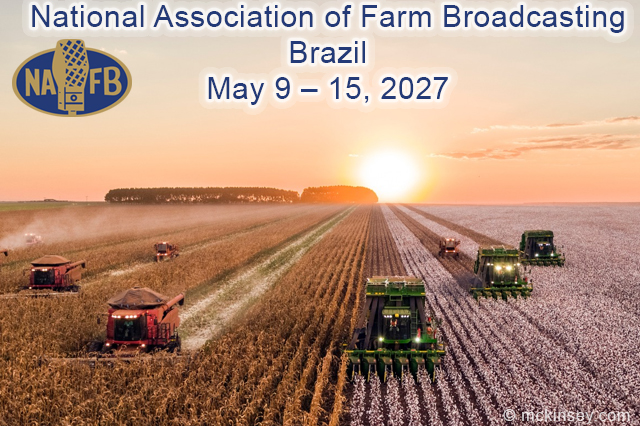
After breakfast and checkout, we head towards Araras for our first visit of the day at a sugarcane mill and farm. Founded in 1947, an example of tradition, quality and simplicity. With an area of 19 thousand hectare planted with sugarcane, 1,9 million ton of processed sugarcane. Annually production of 122,000 tons of crystal sugar, 70 million liters of ethanol, molasse and bioenergy. This farm is focused on biofuels, energy, ethanol and sugar production.
Lunch will be provided before our next visit with Bayer Forward Farming. Founded in 2005 under family operation, they established conscious agricultural practices based on the principles of regenerative agriculture and believe this is the key to the future of agriculture. They cover an area of 1,200 hectares and produce soy, corn, sorghum, cassava and sugar cane production.
Topics for the visit include:
May 12 Pirassununga – Descalvado – Ribeirao Preto ( B / L / - )
Dairy, citrus beef will be the focus of our day as we depart for Descalvado. Our first stop is a family business operation founded in 1945. They directly employ over 200 people, farming on 1,200 hectares and operating in an intensive livestock farming model with dairy cattle, beef cattle and poultry. Among the 5 largest milk producers in Brazil, they have the largest registered herd of Dutch cow and are pioneers in the production of A2 milk. The farm has 3 important certifications: Green Seal, A2A2 Cow Certificate and Animal Welfare Seal. Dairy farming is the farm's primary activity, with over 5,000 animals and daily production of more than 65,000 liters of milk. The milk is supplied to the on-site dairy processing plant to produce yogurt, milk, and other products. A portion of the output is sold as raw milk to other companies.
May 13 Ribierao Preto – Franca – Barretos ( B / L / - )
A trip to Brazil would not be complete without exploring their coffee production which we learn more about today. This company, founded in 1984, produces specialty coffee with sustainable management and production. We will tree cultivation, harvesting, sun drying patios, industrialization and commercialization. They are a brilliant example of a labor social program. They are the first farm in São Paulo State to make all export process aiming at the best certifications.
Lunch will be served in a local restaurant before we head to Barretos, which is known as the “Brazilian Texas”, a region focused on beef cattle production.
Dinner on our own.
Overnight: Barretos
May 14 Barretos – Colina – Holambra ( B / L / - )
Today we visits a diversified farm which houses beef cattle production, a feedlot, rubber trees, sugarcane and grains. With more than 50 years of tradition they aim for high-performance agriculture and responsible beef cattle farming. The tour focuses on two distinct fronts: Agropecuária 3i (precision agriculture and beef cattle farming), and their decades of tradition in the production of sugarcane, grains, and rubber trees. The union of these operations today forms a more complete and diversified company, ready for the challenges of global agriculture.
Lunch will be served after the visit on our way to the Holambra region where we will overnight.
Dinner on our own.
Overnight: Holambra region
May 15 Holambra - Sao Paolo – Home ( B / L / - )
Holambra is the national capitol of flowers, located in the interior of the Sao Paolo region, famous for it’s Dutch heritage. The region produces most of Brazil’s flowers. Here we will visit a flower farm (alternative options is a Horti fruit farm).
After lunch we begin the drive back to Sao Paolo to catch our flight back to the States.
GROUP AIR FLIGHTS (please see notes)
AA0962
Sao Paolo
Dallas
Departure: 23:15
Arrival: 07:50
Hotel information to be determined once the tour is confirmed.
Included:
Not included:
Total Program Cost:
Payment Requirements
Our registration deadline for the tour is January 10th, 2027. If we do not reach our minimum of 10 passengers registered by January 10th the tour will not proceed. Should we reach our minimum before this deadline we will require non-refundable deposits once the minimum is met.
Cancellation Penalties:
Insurance
We strongly recommend adequate travel insurance for US citizens travelling. Package tour insurance can be purchased through Frederick Travel’s web link at: https://www.johnhancocktravel.com/?agentcode=11372. Optional travel insurance can also be purchased through any US travel agency or US insurance broker. We strongly recommend the purchase of travel insurance and encourage our clients to discuss specific travel insurance needs with their local supplier(s).
No bookings have been confirmed, and prices are subject to change due to the exchange rate between US Dollar and Real (Brazilian Currency). The final program with the specific timetables will be provided after the confirmation of the group. All the technical visits are subject to approval and to changes, can be replaced by similar ones.
Special Note:
In the event that a confirmed traveler has to cancel but finds a replacement OR one is available from wait-lists, between date of booking and 45 days prior to date of departure, a flat $50.00 (plus tax) administration fee will be charged.
Group Air Fare and Notes
We have a limited number of group seats held on the flights indicated in the itinerary. These are available on a first-come / first-served basis at a cost of USD.